
Rollei Rolleiflex 4x4 Baby (grey/black)
The Rolleiflex 4x4 Baby is a twin-lens reflex camera using 127 roll film to produce 4x4cm square negatives. It is the compact counterpart to Rollei's 6x6 Rolleiflex line, and the grey/black finish is the post-war version introduced to differentiate the Baby from its larger siblings.
UK auction hammer prices for the grey/black Rolleiflex 4x4 Baby are thin on the ground, with recorded results running from £57 up to £138, producing a midpoint around £98. Because the dataset is small, what a clean example is worth today depends heavily on cosmetic condition, working shutter speeds and the presence of the original case and caps, and results at saleroom level can move outside this range when a particularly tidy or tired body comes up.
Sales History
Prices shown are realised prices — auction results and completed eBay sales, never asking prices. Most saleroom figures are hammer prices, before commission; some houses publish a premium-inclusive figure, and we do not adjust for condition. Dealer and retail asking prices are typically higher. How this figure is calculated.
Prices updated: August 2026
| Date | Price | Value GBP | Source | |
|---|---|---|---|---|
| Aug 2026 | £144 | £144 | 🇬🇧 eBay | |
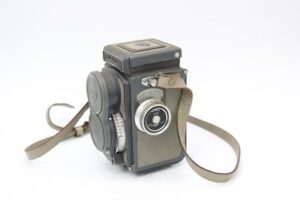
Title: T Cased Rolleiflex 4x4 Baby Grey Film Camera W/Xenar 60mm 3.5 lens
Description:
Clear lens. Hasn't been tested for working order. Weight:- The item is approx. T.Baker Jewellery. Location: Shifnal, shropshire, United Kingdom |
||||
|
Loading...
|
||||
| Aug 2026 | £162 | £130 | 🇬🇧 Flints Auctions | |
|
Auction: Cameras & Scientific Instruments (Lot 225) Title: A Rollei Baby Rolleiflex TLR Camera
Description:
grey, serial number 2056479, body G, optics G, with plastic case. |
||||
|
Loading...
|
||||
| Aug 2026 | £162 | £130 | 🇬🇧 Flints Auctions | |
|
Auction: Cameras & Scientific Instruments (Lot 290) Title: A Rollei Baby Rolleiflex 4x4 TLR Camera
Description:
grey, body VG, shutter works, with lens hood. |
||||
|
Loading...
|
||||
| Jul 2026 | EUR 199 | £170 | 🇪🇺 eBay | |
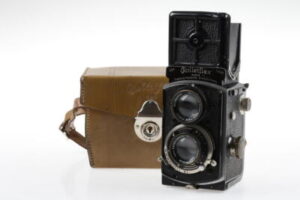
Title: Rollei Rolleiflex Baby 4x4 2.8 Black - SNr: 156044
Description:
SNr: 156044. Professionelles Service Unsere Mitarbeiter/Innen leben Fotografie. Rollei Rolleiflex Baby 4x4 2,8 schwarz. Gebraucht-Ankauf Wir kaufen Ihre Gebrauchtgeräte an. B+ : Sehr guter Zustand mit leichten, sichtbaren Gebrauchsspuren. Location: Graz, Austria |
||||
|
Loading...
|
||||
| Jun 2026 | £157 | £157 | 🇬🇧 eBay | |
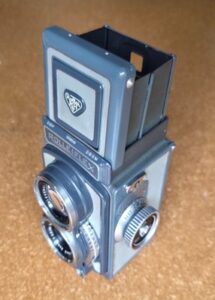
Title: Rolleiflex 4x4 Baby Grey TLR 127 Camera 60mm f/3.5 Lens and Case - Fully Working
Description:
Rolleiflex Grey 4x4 and Case. Viewfinder clean, shutter working fine, 60mm 3.5 Xenar lens optics clean with no fungus, marks, or scratches. Case shows wear but fully functional. Location: Holmfirth, United Kingdom |
||||
|
Loading...
|
||||
| Jun 2026 | £186 | £186 | 🇬🇧 eBay | |
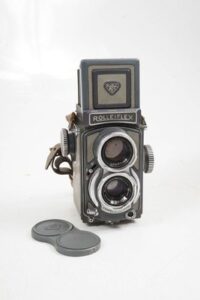
Title: ROLLEIFLEX GREY BABY 4X4 127 FILM MEDIUM FORMAT TLR CAMERA F3.5 XENAR LENS
Description:
This appears to be a Baby Rolleiflex / “Grey Baby” model for 127 film. Original Rolleiflex lens cap included. Viewfinder opens and closes as intended. Waist-level finder. Schneider Kreuznach lens set. Location: Clitheroe, United Kingdom |
||||
|
Loading...
|
||||
| Jun 2025 | £81 | £65 | 🇬🇧 Flints Auctions | |
|
Auction: Cameras & Scientific Instruments (Lot 154) Title: A Rollei Rolleiflex Grey Baby TLR Camera
Description:
grey, serial number 2050387, body G, with the f/3.5 50mm Xenar lens, taking and viewing optics G, with grey case, shutter advances but doesn't appear |
||||
|
Loading...
|
||||
| Feb 2024 | £300 | £240 | 🇬🇧 Flints Auctions | |
|
Auction: Cameras & Scientific Auction (Lot 144) Title: A Rollei Baby Rolleiflex 4x4 Medium Format Camera
Description:
black, serial no. 733873, with Carl Zeiss Jena Tessar f/2.8 60mm lens, body, VG, shutter working, lens, G, some haze to rear elememnt, in maker's |
||||
|
Loading...
|
||||
| Jan 2024 | USD 250 | £197 | 🇺🇸 pedia_sales_tamarkin | |
|
Auction: 2024 Results (Lot 120) Title: Rolleiflex “Baby” (Type 4)
Description:
Rolleiflex “Baby” (Type 4) |
||||
|
Loading...
|
||||
| Sep 2023 | £138 | £110 | 🇬🇧 Flints Auctions | |
|
Auction: Cameras & Scientific Instruments (Lot 78) Title: A Rollei Baby Rolleiflex 4x4 TLR Camera
Description:
black, serial no. 134483, with Carl Zeiss Jena Tessar f/3.5 60mm lens, body, G, shutter working, lens, G, some internal haze, complete with maker's |
||||
|
Loading...
|
||||
| Oct 2022 | £81 | £65 | 🇬🇧 Flints Auctions | |
|
Auction: The Collectors Sale (Lot 346) Title: A Rollei Baby Rolleiflex 127 Roll Film TLR Camera
Description:
grey, body G-VG, shutter jammed, with Schneider-Kreuznach Xenar f/3.5 60mm lens, optics G-VG, with lens cap Note: Lot imported under Temporary (Qty: 1) |
||||
|
Loading...
|
||||
| Mar 2018 | EUR 600 | £530 | 🇦🇹 Leitz Auction | |
|
Auction: Leitz Auction 32 (Lot AI_32_36065) Title: Rolleiflex Baby 4x4
Description:
late war-time camera (with serial number outside of the usual range 622000-734000) in very good working condition, Tessar 2.8/6cm no.2263023, quite uncommon back for single exposures, UV filter Estimate: EUR 500 - EUR 600 |
||||
|
Loading...
|
||||
| Nov 2004 | EUR 500 | £349 | 🇦🇹 Leitz Auction | |
|
Auction: Leitz Auction 6 (Lot AI_6_24149) Title: Rolleiflex Baby black
Description:
4x4cm, post-war baby in mint condition with Xenar 3.5/60mm, black case with black strap, also: brown ever-ready case Estimate: EUR 500 - EUR 600 |
||||
|
Loading...
|
||||
| Nov 1999 | £86 | £75 | 🇬🇧 Christie's | |
|
Auction: Magic Lanterns, Optical Toys and Cameras (Lot 463) Title: Baby Rolleiflex no. 2000474
Description:
Baby Rolleiflex no. 2000474 Estimate: £25 - £90 |
||||
|
Loading...
|
||||
| Feb 1999 | £57 | £50 | 🇬🇧 Christie's | |
|
Auction: Cameras and Optical Toys (Lot 436) Title: Baby Rolleiflex no. 2049220
Description:
Baby Rolleiflex no. 2049220 Estimate: £25 - £200 |
||||
|
Loading...
|
||||
| Nov 1998 | £109 | £95 | 🇬🇧 Christie's | |
|
Auction: KOSLOV COLLECTION OF CAMERAS AND SCIENTIFIC INSTRUMENTS (Lot 169) Title: 'Baby' Rolleiflex no. 2052954
Description:
'Baby' Rolleiflex no. 2052954 Estimate: £100 - £150 |
||||
|
Loading...
|
||||
| Mar 1998 | £63 | £55 | 🇬🇧 Christie's | |
|
Auction: CAMERAS & OPTICAL TOYS (Lot 348) Title: Baby Rolleiflex TLR no. 2044518
Description:
Baby Rolleiflex TLR no. 2044518 Estimate: £100 - £150 |
||||
|
Loading...
|
||||
| Nov -0001 | £69 | — | 🇬🇧 Flints Auctions | |
|
Auction: The Collectors Sale (Lot 721) Title: A Baby Rolleiflex TLR 127 Camera
Description:
grey, shutter not working, optics F, some haze & fungus present, (Qty: 1) |
||||
|
Loading...
|
||||
Frequently asked questions
What is a Rolleiflex 4x4 Baby (grey/black) worth today?
Based on the limited UK auction hammer records available, prices have ranged from about £57 to £138, so a working example in presentable condition typically sells for somewhere in the middle of that band.
How much does a grey/black Baby Rolleiflex sell for at auction?
Recorded UK saleroom results sit between roughly £60 and £140 at hammer, with condition, shutter accuracy and completeness of accessories driving where an individual example lands.
Is the Rolleiflex 4x4 Baby still usable today?
Yes, but it requires 127 roll film, which is only produced in small batches by specialist suppliers, so film availability and price are the main practical constraints on regular use.